

What Is Silicon Insider Wearable Tech?
Silicon Insider Wearable Tech refers to wearable technology as a subject within consumer electronics and digital innovation. Wearable devices allow users to access digital services directly through products worn on the body.
The topic covers established products, such as fitness bands and smartwatches, alongside newer categories, such as smart rings and AI-powered glasses. These products serve different purposes, ranging from activity tracking to hands-free communication.
Readers can use wearable technology guides to research product features, compare device categories, and learn about developments in the technology market. For precise specifications, prices, and compatibility details, manufacturer documentation remains an important source.
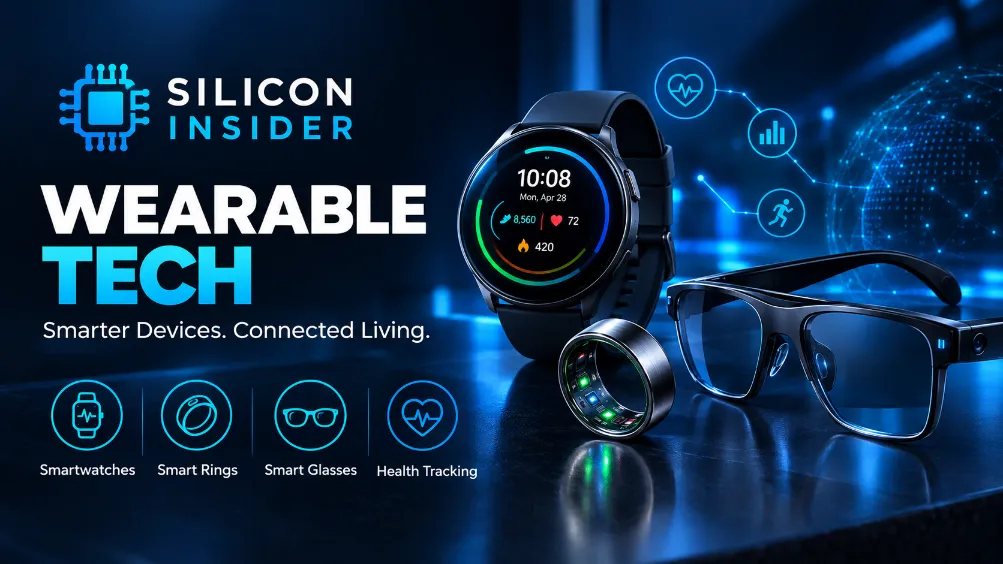
Main Information About Silicon Insider Wearable Tech
| Detail | Information |
|---|---|
| Website | Silicon Insider |
| Main topic | Wearable technology |
| Content type | Technology guides and product-related topics |
| Device categories | Smartwatches, fitness trackers, smart rings, and smart glasses |
| Related technologies | Artificial intelligence, sensors, Bluetooth, and mobile applications |
| Intended readers | Gadget shoppers, technology readers, and everyday users |
| Main purpose | Learning about wearable devices and their practical uses |
Wearable technology content can help readers identify products that match their needs. However, users should verify technical specifications, medical claims, prices, and software support before making a purchase.
Types of Wearable Technology
Wearable technology covers several product categories. Each category offers different features, designs, and practical applications.
1. Smartwatches
Smartwatches combine the functions of a traditional wristwatch with digital services. Depending on the model, users can receive notifications, answer calls, track workouts, check navigation instructions, and monitor selected health measurements.
Common smartwatch features include:
- Step counting and activity tracking.
- Heart-rate monitoring.
- Sleep tracking.
- Calendar alerts and message notifications.
- GPS-based exercise recording on supported models.
- Mobile payments through compatible services.
Battery life, display quality, available applications, and phone compatibility vary between products. Buyers should check these details before selecting a smartwatch.
2. Fitness Trackers
Fitness trackers focus on physical activity, exercise, and daily movement. Many models feature a lightweight design, making them suitable for users who prefer a compact device with straightforward tracking tools.
| Feature | Practical use |
|---|---|
| Step counter | Records daily movement |
| Exercise modes | Tracks selected workouts |
| Sleep tracking | Provides estimates of sleep duration and patterns |
| Heart-rate sensor | Measures pulse at intervals or during activity |
| Activity reminders | Encourages regular movement |
| Companion application | Displays recorded measurements and trends |
Fitness trackers can support personal exercise goals, but sensor accuracy varies by model. Their readings should serve as estimates rather than medical diagnoses.
3. Smart Rings
Smart rings place electronic sensors inside a compact ring worn on a finger. Many models record activity, sleep patterns, and selected physiological measurements. Their discreet design appeals to users who prefer an alternative to wrist-worn devices.
Before purchasing a smart ring, review these points:
- Ring sizing and everyday comfort.
- Battery life and charging requirements.
- Compatibility with your smartphone.
- Subscription charges for advanced features.
- The measurements available through the companion application.
Most smart rings have limited direct interaction because their small designs leave little room for displays or physical controls.
4. Smart Glasses
Smart glasses combine eyewear with selected digital features. Depending on the model, they may offer microphones, speakers, cameras, voice assistants, navigation support, or visual displays.
Possible uses include listening to audio, taking calls, capturing photos, and accessing hands-free assistance. Advanced models may offer augmented reality features, although the available functions differ between products.
Privacy deserves attention, especially with camera-equipped glasses. Users should follow local recording laws, respect venue policies, and avoid recording others without appropriate permission.
5. Health Monitoring Wearables
Health monitoring wearables collect selected measurements to support personal health management. Examples range from wrist-based heart-rate sensors to specialized devices that monitor glucose levels or other health indicators.
| Device type | Main purpose |
|---|---|
| Heart-rate wearable | Records pulse measurements |
| Sleep tracker | Estimates sleep duration and patterns |
| Activity monitor | Records movement and exercise |
| Continuous glucose monitor | Measures glucose levels through a dedicated sensor |
| Medical monitoring device | Supports a specific medical purpose, depending on its authorization |
Users should check the intended use and regulatory status of health-related devices. General wellness products do not necessarily offer medical-grade accuracy, and a wearable should not replace professional medical advice.
How Wearable Technology Works
Wearable devices combine sensors, processors, software, batteries, and wireless connections. These components work together to collect information and present useful results.
Sensors Collect Data
- Motion sensors record movement, while optical sensors can measure pulse-related signals. Other sensors may track temperature, location, or environmental conditions.
Processors Handle Information
- The device processes collected readings and applies software algorithms to calculate results. These calculations may produce activity totals, workout summaries, or sleep estimates.
Applications Display Results
- A compatible smartphone or computer can display measurements, charts, notifications, and longer-term records. Some devices process most information locally, while others transfer selected data to remote services.
Wireless Connections Link Devices
- Bluetooth commonly connects wearables to nearby smartphones. Certain products also support Wi-Fi or cellular connectivity, allowing selected functions to operate without a nearby phone.
Batteries Supply Power
- Rechargeable batteries provide energy for sensors, displays, processors, and wireless communication. Battery performance depends on device design, screen brightness, tracking frequency, and software settings.
Benefits of Wearable Technology
Wearable technology can make everyday digital tasks more convenient. Its value depends on how well the device matches the user’s needs.
Main benefits include:
- Activity tracking: Users can review steps, workouts, and daily movement.
- Convenient communication: Compatible devices display notifications and support selected calls.
- Personal monitoring: Supported wearables record selected health and wellness measurements.
- Fitness planning: Workout records help users review exercise progress.
- Hands-free access: Smart glasses and audio-enabled wearables reduce the need to handle a phone.
- Daily organization: Reminders, timers, calendars, and alerts support personal routines.
- Personalized reports: Companion applications may present activity patterns and progress summaries.
These benefits depend on comfortable hardware, reliable sensors, useful software, and appropriate settings. A device with more features does not automatically provide a better experience.
Latest Wearable Technology Trends
Wearable technology covers more than basic fitness tracking. Manufacturers are developing smaller sensors, improved connectivity, intelligent software, and new ways to access digital services.
| Trend | Potential use | Practical consideration |
|---|---|---|
| AI-powered wearables | Voice assistance and personalized responses | Review privacy controls and subscription costs |
| Advanced health sensors | More detailed personal measurements | Check accuracy and intended use |
| Smart glasses | Hands-free audio, camera, or visual functions | Consider comfort and recording privacy |
| Smart rings | Compact wellness monitoring | Check sizing and application requirements |
| Connected devices | Data sharing across compatible products | Verify platform compatibility |
| Energy-efficient hardware | Potentially longer operating time | Actual battery life varies by model |
Artificial intelligence can help analyze sensor readings and deliver contextual assistance. However, automated health suggestions require careful interpretation, and users should review how manufacturers store and process personal information.
How to Choose the Right Wearable Device
The right wearable should match your daily routine, budget, preferred features, and smartphone platform. A fitness-focused user may prioritize exercise tracking, while another person may prefer communication tools or a discreet design.
Use this checklist before purchasing:
- Set a budget: Consider the device price and recurring software fees.
- Check compatibility: Confirm support for your phone and operating system.
- Review battery life: Compare manufacturer specifications with independent tests.
- Assess comfort: Consider weight, strap material, ring size, or frame design.
- Check sensor capabilities: Confirm that the product records the measurements you need.
- Review privacy controls: Examine data-sharing options, account security, and deletion settings.
- Check durability: Review water resistance, warranty coverage, and repair options.
- Read independent reviews: Look for practical testing rather than relying only on promotional descriptions.
A fitness band may suit users who want basic activity tracking. A smartwatch may appeal to those who want notifications, exercise tools, and communication features in one device. Smart rings and smart glasses serve different preferences, so personal requirements should guide the purchase.
Privacy and Security in Wearable Technology
Wearable devices can collect personal information about movement, sleep, location, communication, and selected physiological signals. Some products transfer this information to companion applications or remote servers.
Users can improve privacy and security through a few practical steps:
- Use a strong password and multifactor authentication where available.
- Review application permissions and disable unnecessary access.
- Install official firmware and application updates.
- Read the manufacturer’s data retention and sharing policies.
- Restrict location access to applications that require it.
- Review data export and account deletion options.
- Avoid sharing personal health reports publicly without considering the risks.
Camera-equipped wearables require extra care in shared spaces. Health-related records also deserve protection because they may reveal personal routines and sensitive information.
Is Silicon Insider Wearable Tech Worth Reading?
Silicon Insider’s wearable technology topic can serve as a starting point for readers researching connected gadgets and consumer electronics. The usefulness of a particular page depends on the quality of its information, the depth of its coverage, and the evidence supporting its claims.
Readers can get more value from technology guides by following these steps:
- Read introductory material about wearable device categories.
- Compare product features with personal requirements.
- Verify prices and availability through current retailer listings.
- Check manufacturer documentation for technical specifications.
- Consult reliable medical sources for health-related claims.
- Review independent product tests before making a purchase.
Technology websites can help readers discover products and research topics. Manufacturer documentation and independent testing provide additional support for checking specifications and real-world performance.
Final Thoughts
www silicon-insider .com Wearable Tech covers a broad subject within consumer electronics, from smartwatches and fitness trackers to smart rings, smart glasses, and specialized health devices.
These products can support activity tracking, communication, personal organization, and selected health-monitoring tasks. Their practical value depends on comfort, battery life, software support, sensor accuracy, and privacy protections.
Readers who compare these factors carefully can make informed purchasing decisions and select wearable devices that suit their daily routines.
